
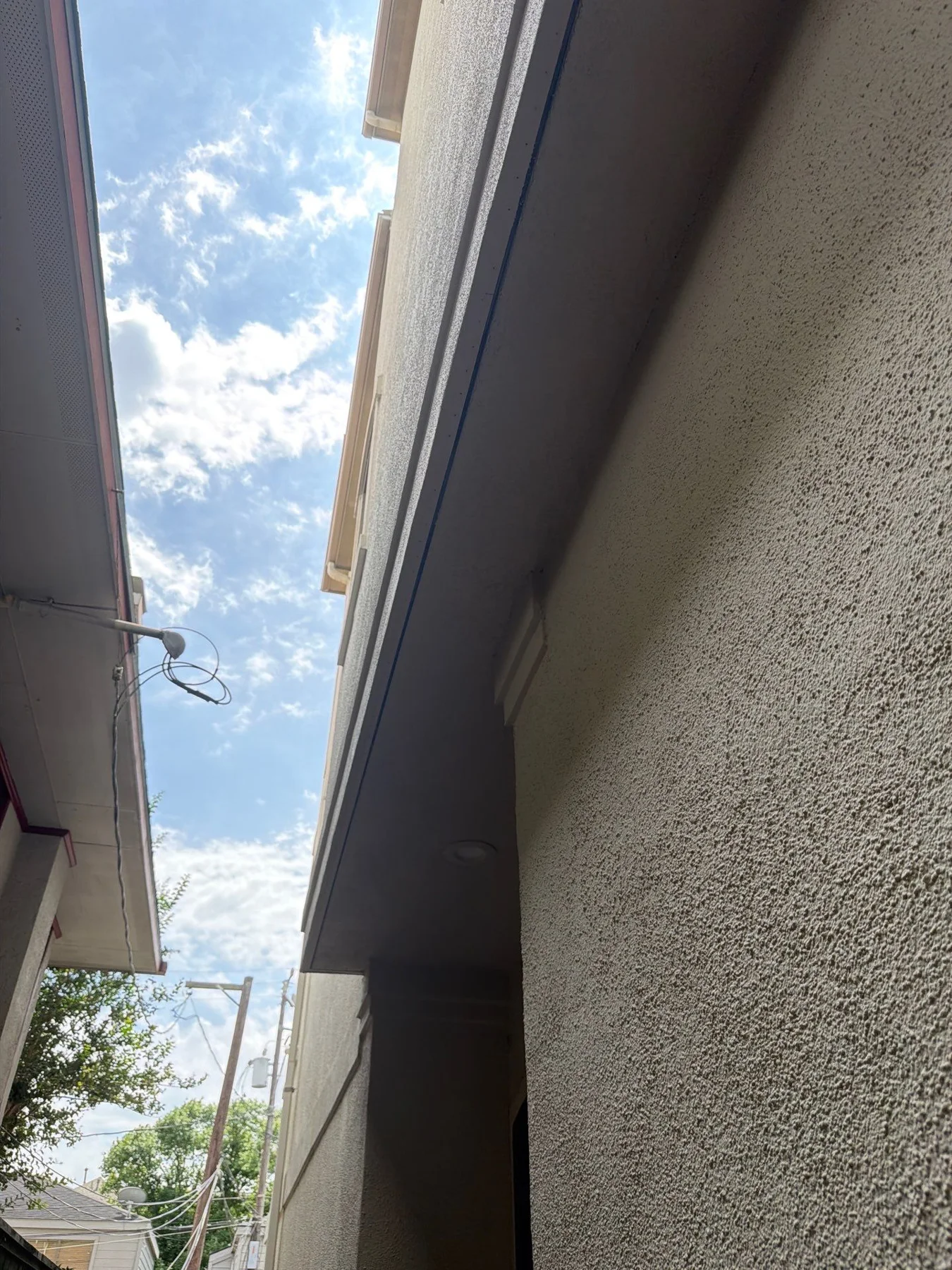
Structural integrity concerns the building's ability to carry loads and remain stable. Stucco restoration deals with the exterior wall finish and associated layers. Those scopes may meet on a damaged property, but they should never be treated as interchangeable.
Conditions that deserve closer attention
Report sagging, visibly displaced components, loose overhead material, or changing cracks accompanied by other building changes. Keep people away from an area with falling material or an apparently unstable balcony or soffit. Do not climb onto it to obtain a better photograph.
What an exterior photograph can and cannot show
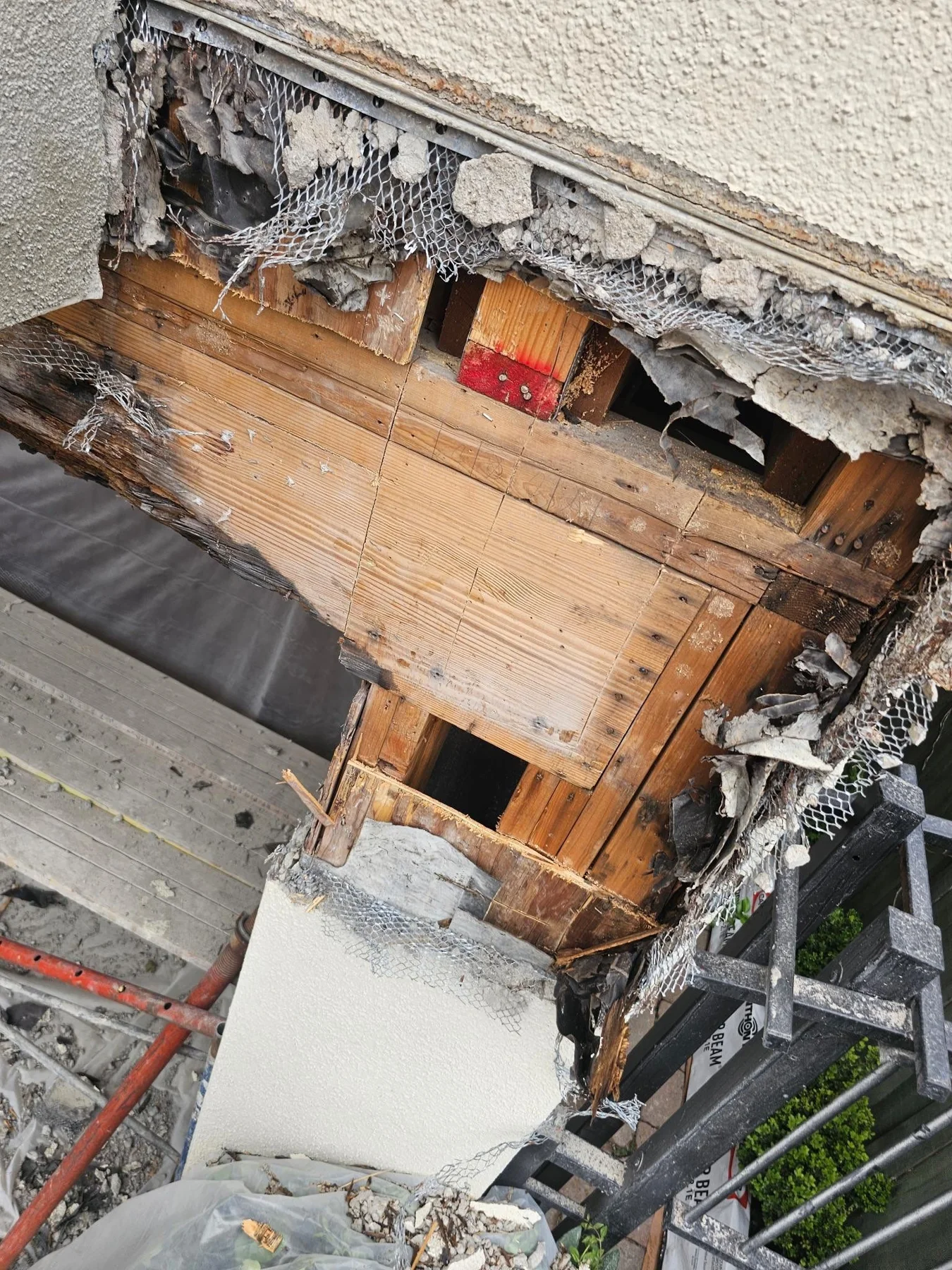
A photo can identify location, access, and visible damage. It cannot measure the remaining strength of concealed framing or establish a structural repair design. An opened wall may lead to a revised scope after the underlying components are assessed.
Ask who is responsible for the evaluation
Before proceeding, clarify whether the condition needs an engineer or another qualified structural professional. Ask who will supply any necessary repair detail and who will carry out and document the work. Finish restoration should be coordinated with that process.
Make the repair record complete
- Keep the initial inspection findings and relevant reports.
- Request photographs before concealed work is covered.
- Record changes in scope and who approved them.
- Separate structural work, exterior layers, and painting in the proposal.
The photographs shown here illustrate opened exterior areas in Monolite's portfolio. They are not a structural diagnosis. Send your existing report through our estimate form so we can discuss the exterior scope and any evaluation it depends on.