
A crack, stain, and loose patch can look like three versions of the same stucco problem. They can also call for very different repairs. Start by recording the symptom, its location, and whether it changes after rain.
Cracks: document the pattern
Photograph both the full wall and the close-up. Note whether a crack crosses a corner, follows a window opening, or has returned through an earlier patch. Crack width alone cannot establish the condition of the wall behind it. Growing cracks, displaced surfaces, and nearby interior changes deserve closer evaluation.
Stains: look beyond the discolored area
Mark when the stain appears and what sits above it, such as a window, balcony, or roof edge. A stain does not establish where water entered. Recurring dampness should be investigated before a new finish hides the evidence.
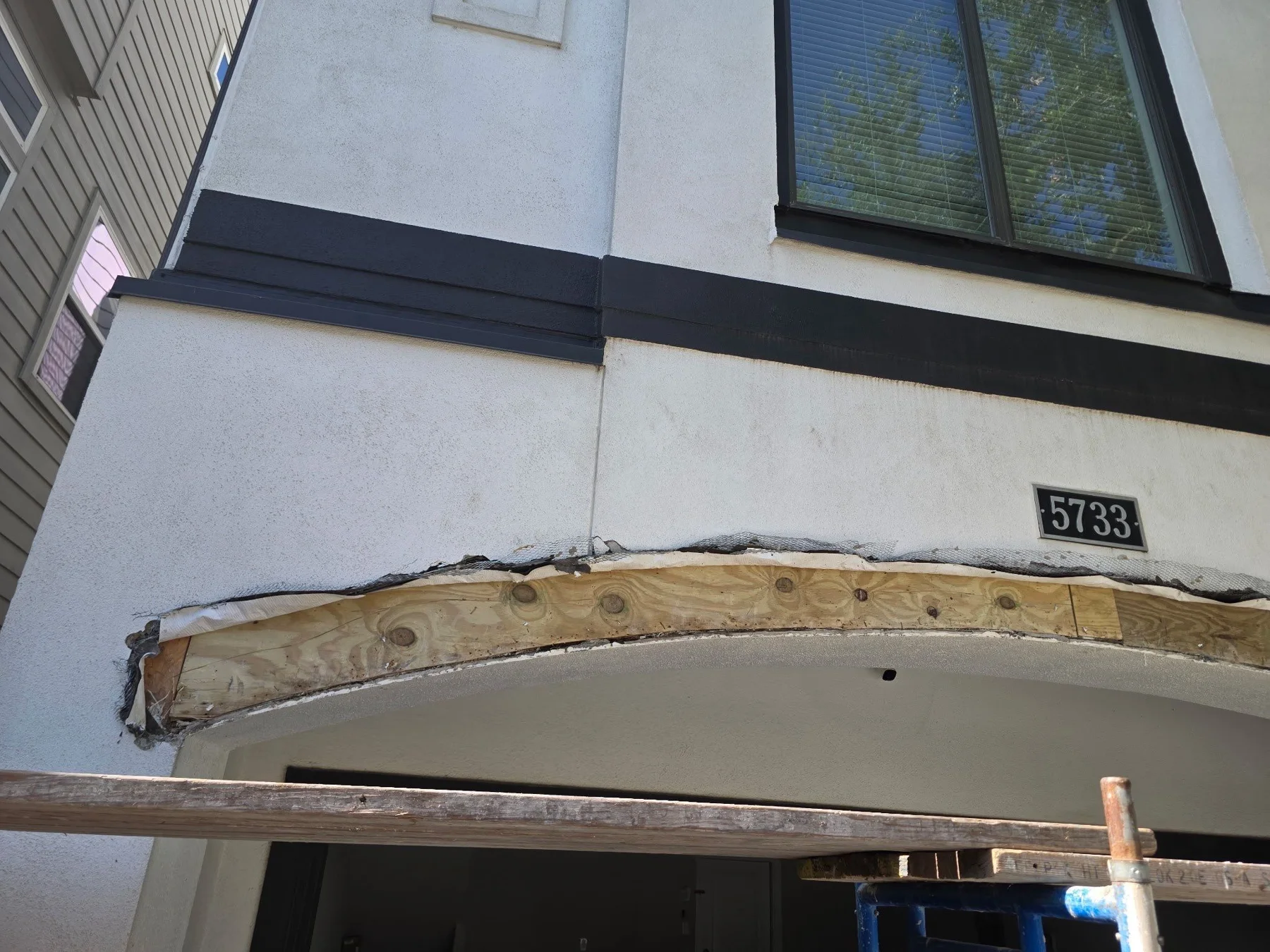
Loose or missing material: assess the repair depth
A surface repair restores the finish. An opening that reveals affected backing needs a broader scope. Ask whether removal, underlying repairs, restoration of the wall layers, texture matching, and painting are included. Keep people away from loose overhead material.
White deposits: investigate before cleaning
White powdery deposits can be efflorescence, but not every pale mark is the same. Ask the contractor to identify the deposit and recommend a compatible cleaning method. Repeated aggressive washing is a poor substitute for understanding why it returns.
A quick way to sort the symptoms
| What you see | Useful next question |
|---|---|
| A patch that has cracked again | What caused the first repair to fail, and was movement or moisture assessed? |
| A stain below a window | Does the window, surrounding wall, or an adjoining detail need investigation? |
| A loose section near a roof edge | How will the area be made safe and the affected layers assessed? |
| A visible but stable color difference | Would a finish sample or a larger painting boundary address the appearance goal? |
Use this as a conversation guide, not a diagnosis chart. For example, a stain below an upper window could prompt an assessment of that opening and the wall above it. Simply coating the stained rectangle would not explain the original symptom.
Read a project sequence with a purpose
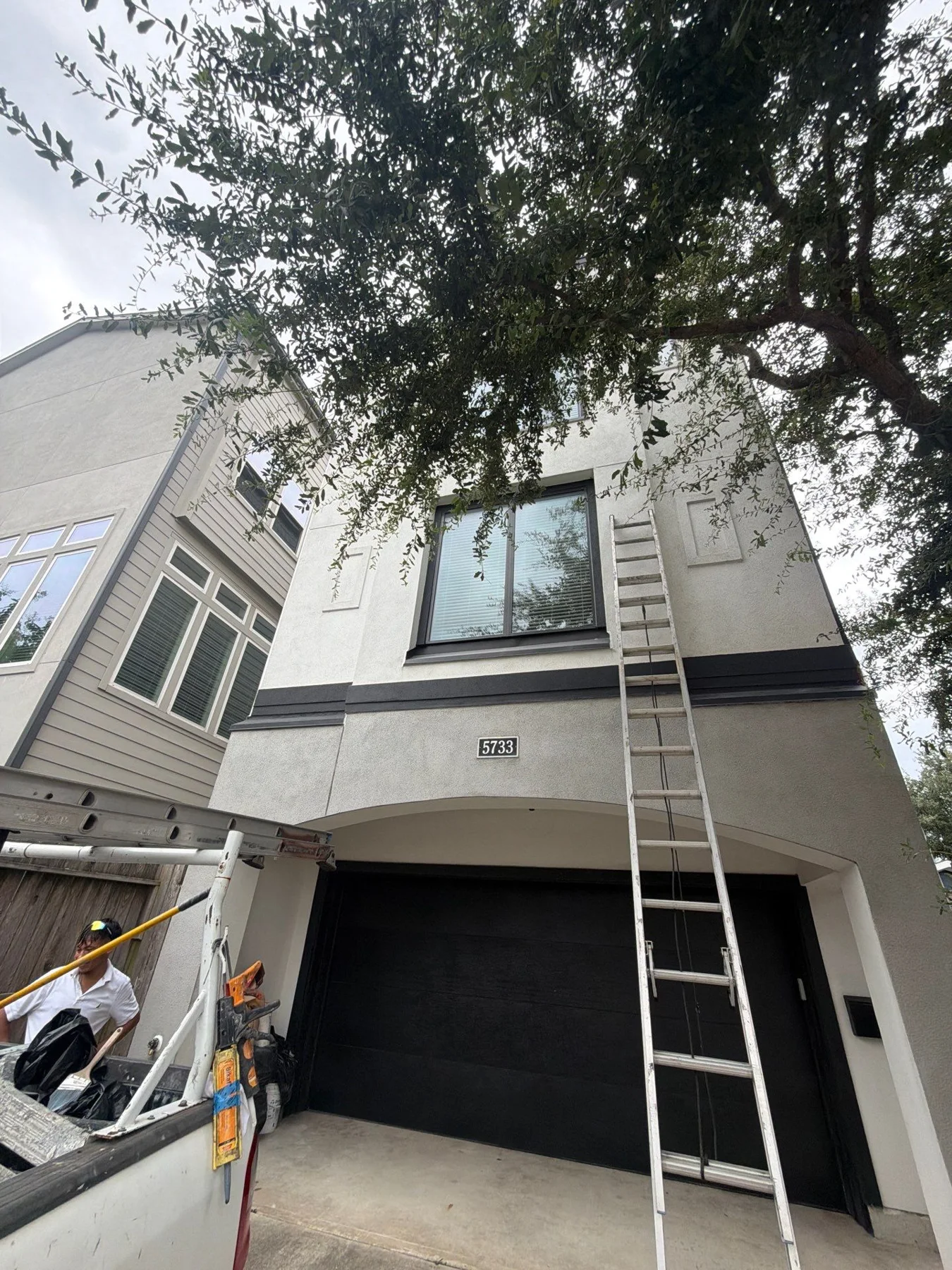
In the garage-arch project shown on this page, the early photograph records an opened area above the garage and the later view shows the broader elevation. The useful comparison is the location and scale of the work. For your own estimate, request the same context so the repair area can be understood from both close up and normal viewing distance.
Choose a scope, then a finish
For an isolated concern, discuss a targeted repair. For repeated failures or several affected openings, ask whether investigation or remediation is appropriate. Our repair-versus-replacement guide explains the questions to use when comparing options.