
Historic stucco can differ from the modern systems used on newer homes. Before replacing it or applying a new coating, understand the existing material and the building features the work should preserve.
Keep sound material where practical
The National Park Service's Preservation Brief 22 emphasizes investigation and compatible repair of historic stucco. Wholesale removal or a stronger modern patch should not be assumed to be the appropriate answer for an older assembly.
Document the details before work
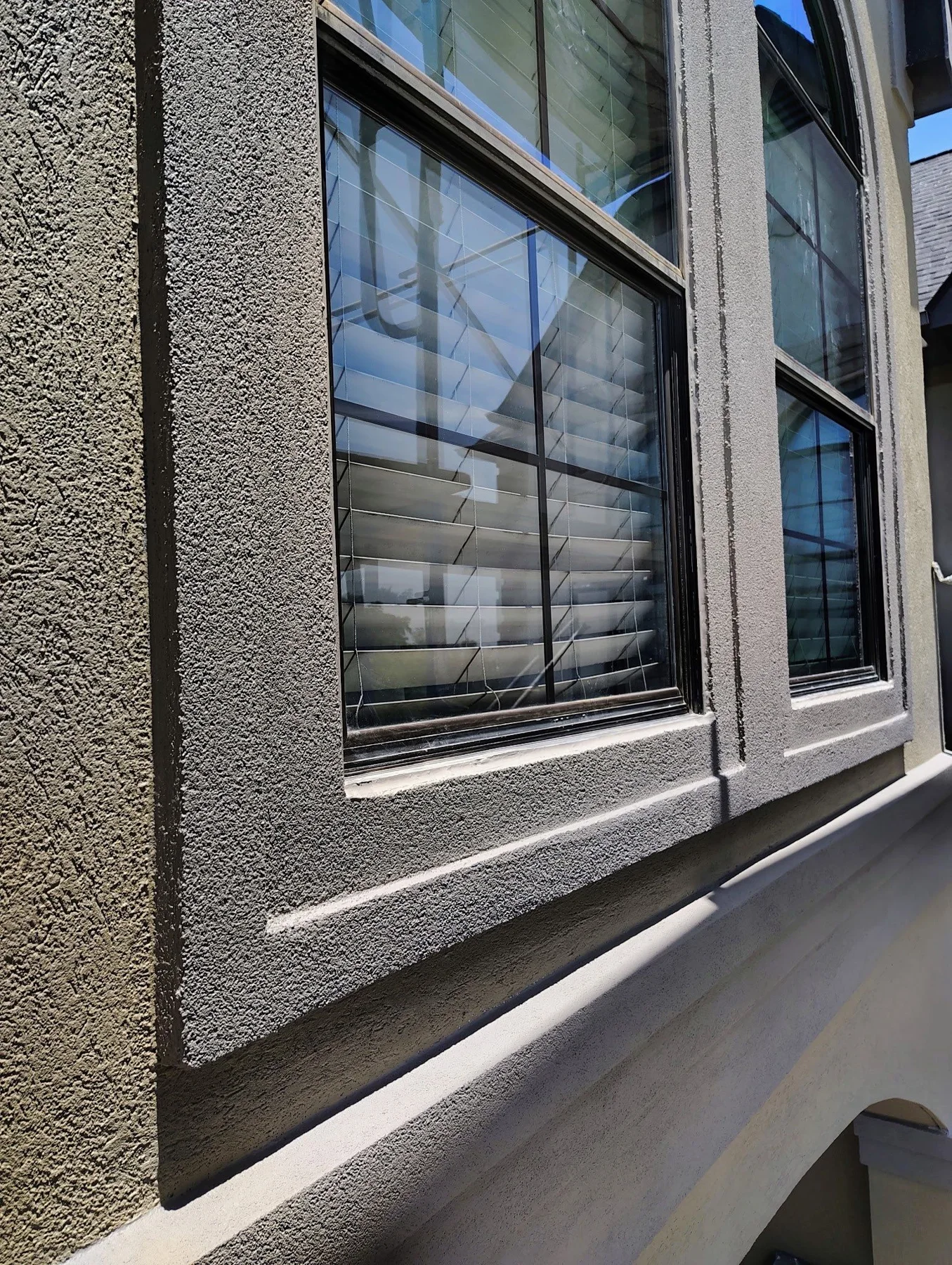
Photograph texture, trim profiles, scoring, corners, and transitions in both broad and close views. Collect previous repair records and any available historic photographs. Those references help establish the intended appearance without relying on memory after removal.
Use an appropriate specialist
Ask for experience with the building's material and the proposed repair method. Discuss whether material analysis or a conservation professional is needed. Confirm any applicable historic-district or landmark review before changing the finish or architectural details.
Approve a representative sample
A sample can help assess texture, color, and how the new work meets the retained surface. Review it in normal daylight and allow the relevant curing period. Record the accepted materials and method for future maintenance.
Be clear about project examples
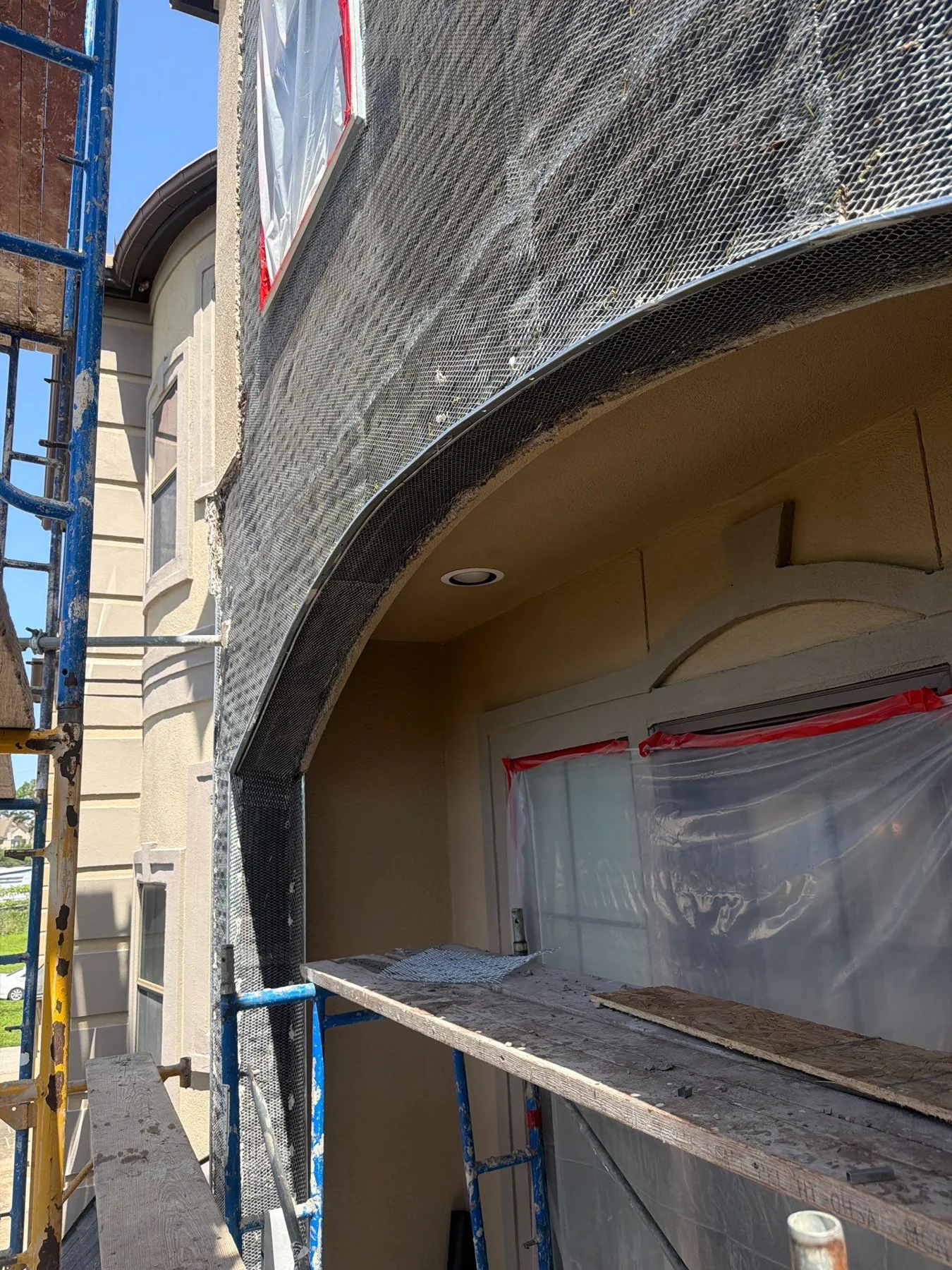
The Monolite photographs on this page show stucco work around an arched window. They illustrate shape and detail; the property is not identified as historic, and these images do not establish preservation credentials.
When contacting Monolite, include the building's known age, designation information, and reports so the appropriate exterior scope and any specialist involvement can be discussed.