
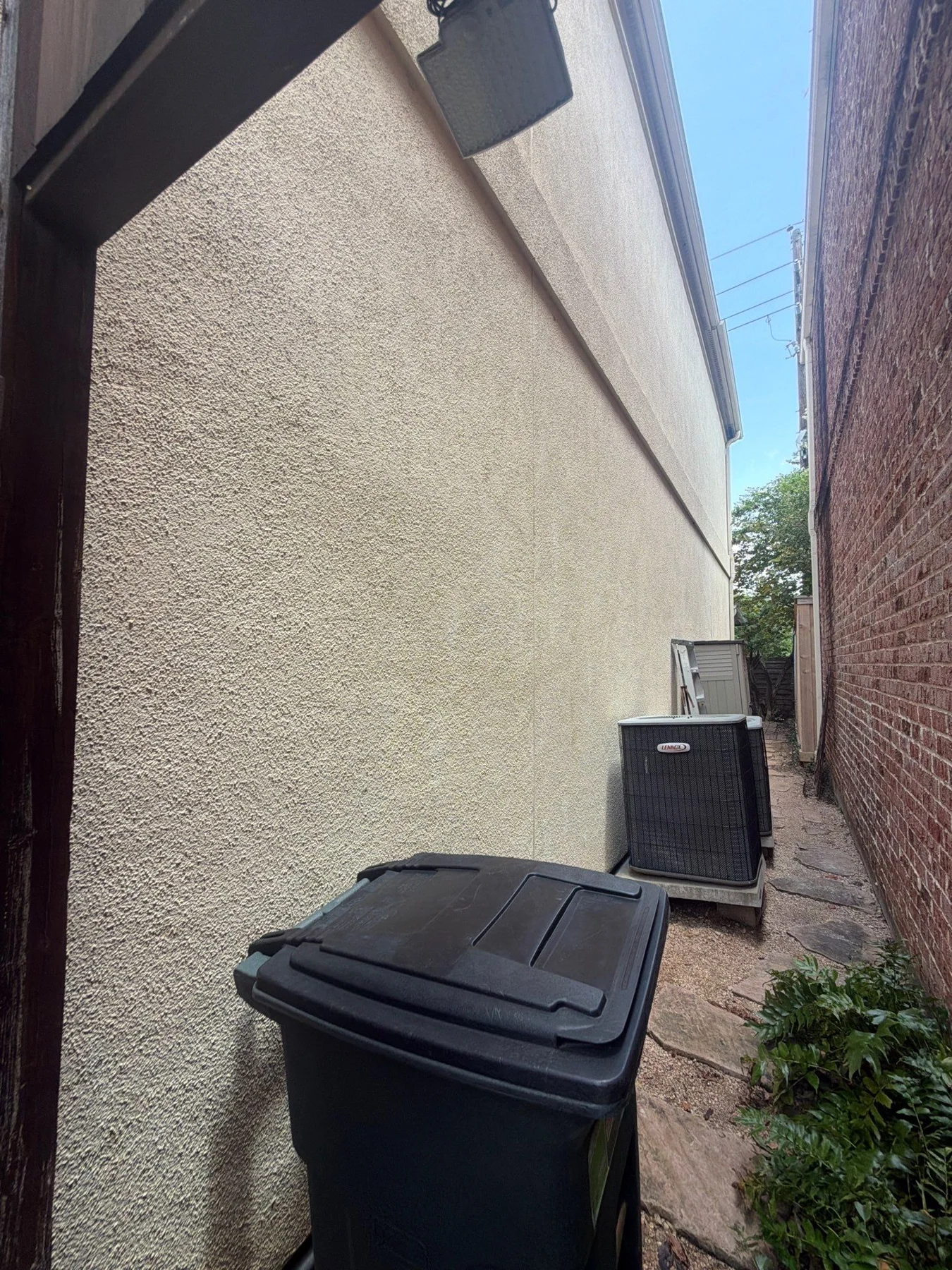
A stucco repair can be sound and still be visible. Differences in texture, color, and lighting can make a small patch stand out. Before work starts, decide how closely the repaired area needs to blend and what finishing scope supports that goal.
Texture has scale and direction
Compare a proposed sample with the surrounding wall at close range and from normal viewing distance. Look at the size of the texture, trowel pattern, and transition along the patch edge. A photo on a phone may hide those differences.
Existing color changes over time
Even a stored color name may not match a weathered wall exactly. Ask whether a sample will be applied and whether a wider coating area is included. Repainting to an architectural break can be worth discussing when a spot touch-up would be conspicuous.

View the wall in different light
Side lighting can emphasize a texture mismatch that disappears in shade. Review the sample when the relevant elevation receives its usual light. Be cautious about promises that a patch will be invisible from every angle.
Keep the repair purpose clear
Appearance work should follow assessment of recurring cracks, stains, or loose material. Changing the surface to hide a concern can make later investigation more difficult. Finish matching is one part of the repair, not proof of the condition behind it.
- Define the patch and paint boundaries.
- Approve texture and color samples where needed.
- Record the accepted appearance and products used.
- Keep completion photographs for future maintenance.
Our stucco finish guide and painting services can help you plan the finishing scope.