
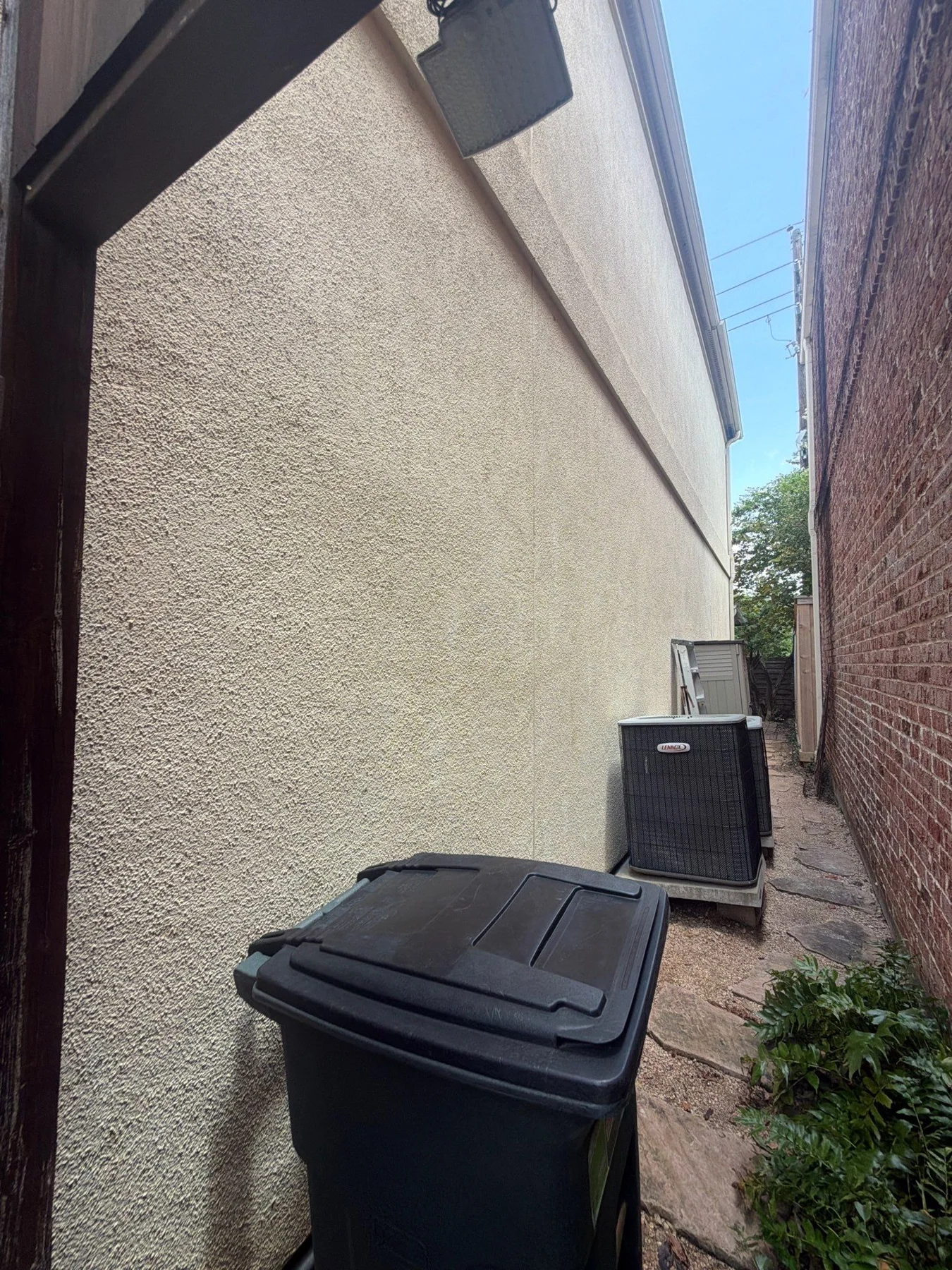
A finish name is a starting point, not a complete specification. Contractors may use different names for similar textures, so photographs and sample panels are more useful than choosing from a label alone.
Five looks to compare
- Smooth or lightly troweled. A restrained surface that emphasizes the wall plane, trim, and changes in light. Discuss how repairs and existing irregularities may remain visible.
- Sand or float. A granular texture whose appearance depends on aggregate and application. Ask to compare fine and coarser samples.
- Lace. A raised, patterned surface with flatter areas between the texture. Use a reference photograph to establish the intended pattern.
- Dash. A more pronounced aggregate texture. Review both a close-up and how it reads across a full elevation.
- Skip-trowel or Spanish-style. An irregular troweled appearance. Specify a sample because the amount of relief can vary substantially.
Match the scope to the goal
Repairing a small area to resemble the existing finish is different from changing the texture of an entire wall. Ask how the transition will be handled and whether the existing coating or substrate affects the available options.

Review samples in changing light
Look at the sample in sun and shade, from the driveway and close to the wall. Compare it with windows, stone, brick, and trim that will remain. A heavily cropped online image can hide scale and shadow.
Keep water management separate
Texture selection does not determine whether the underlying wall details are sound. Settle repairs first, then confirm the compatible finish and coating. Our color selection guide can help with the next design decision.