
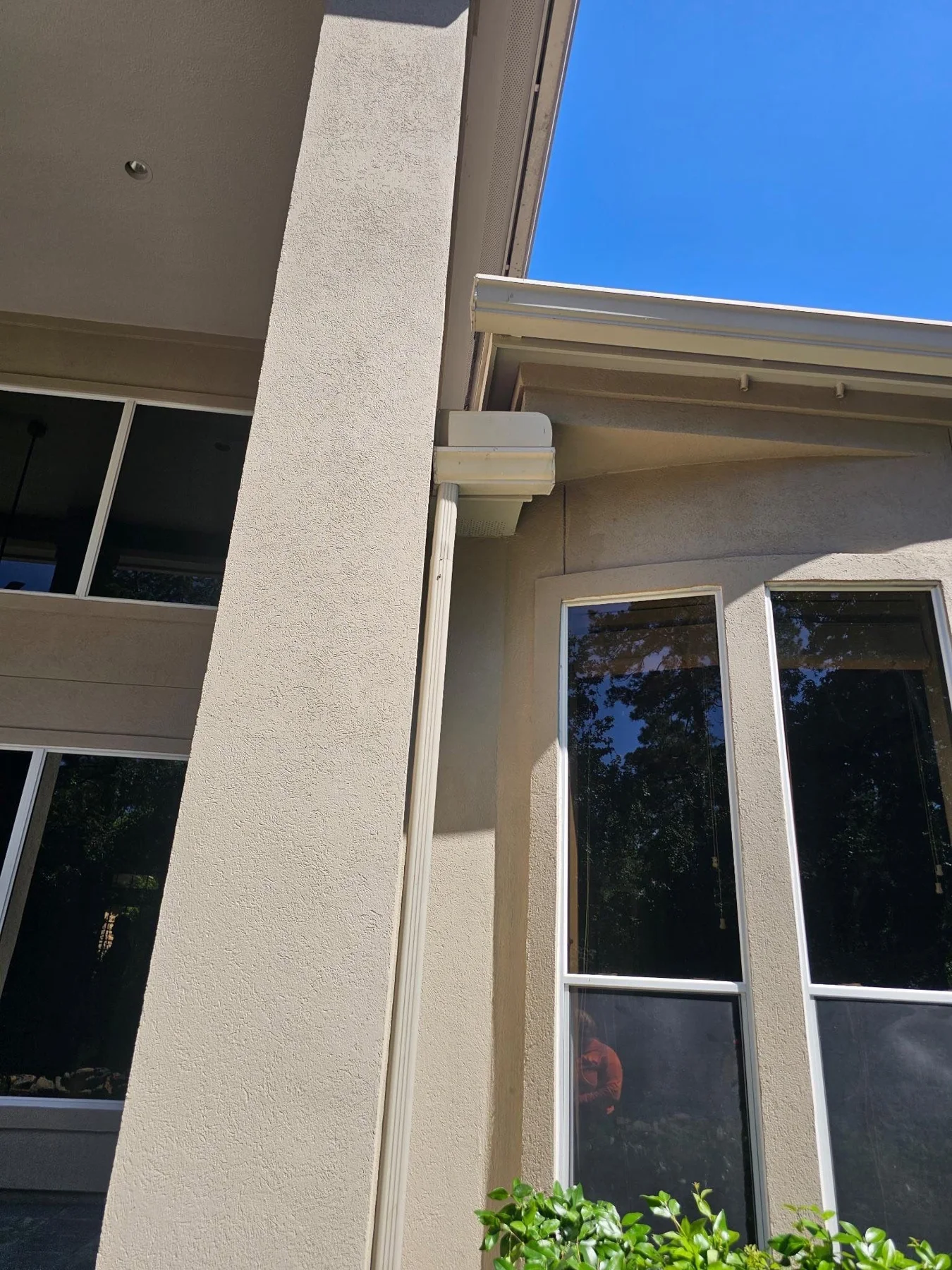
A stain that appears only during certain storms is easy to forget once the wall dries. A short record made after rain can make a later stucco assessment much more useful.
Document the event safely
From indoors or a safe ground-level location, note the date, affected room, and visible exterior area. Describe whether water appeared during the rain or afterward. Photograph the full wall as well as the stain. Do not climb onto a wet roof or balcony to trace the leak.
Show what is above and beside the symptom
Include nearby windows, doors, roof-to-wall connections, and balconies. A contractor needs context because water can appear away from its entry point. If you have a previous repair invoice, attach it so the already-treated areas can be considered.
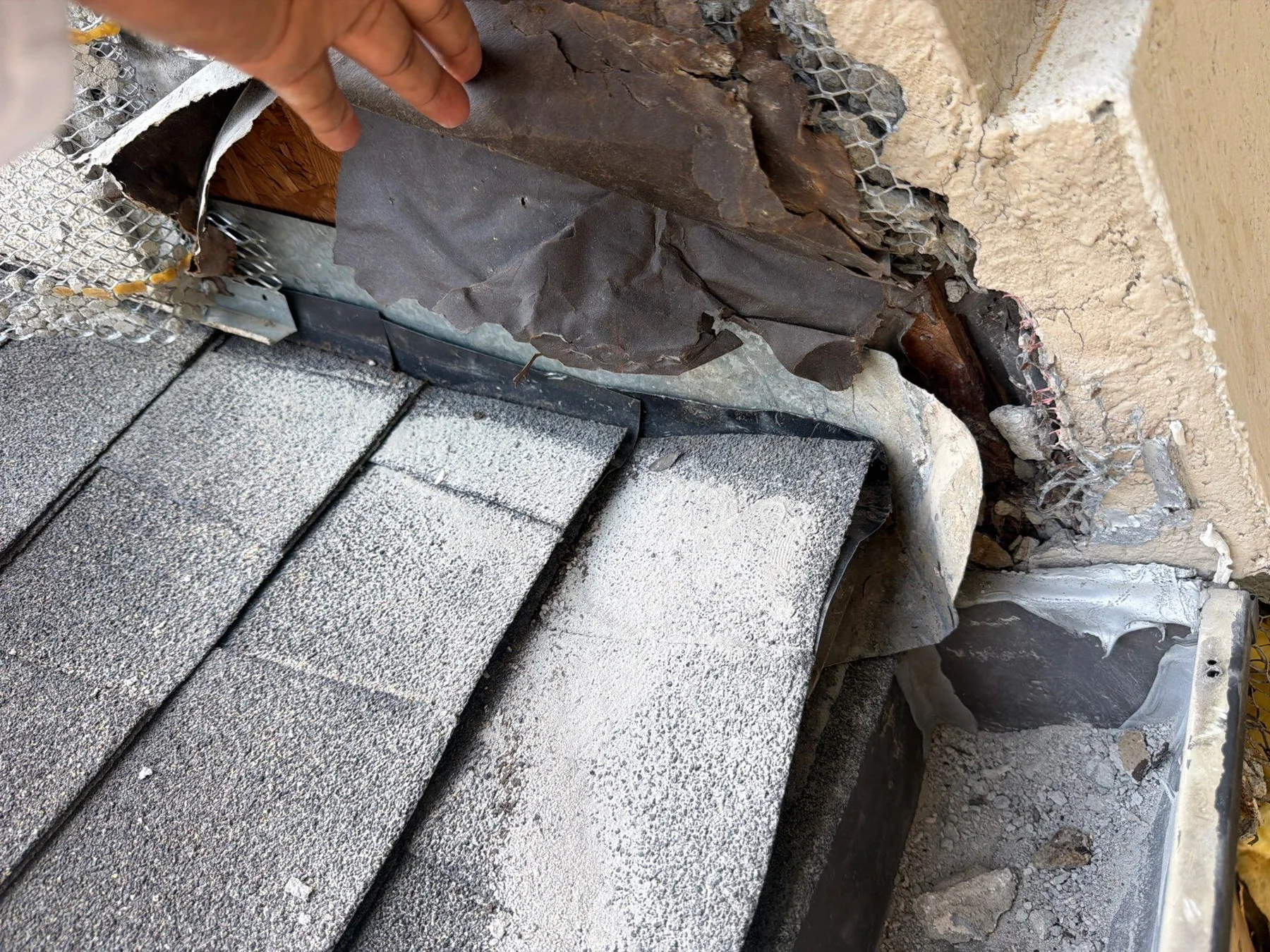
Ask what kind of inspection is proposed
A visual review, moisture testing, controlled water testing, and selective openings provide different information. Ask what question each method is intended to answer, what access is required, and how any test openings will be restored. A visual visit should not be described as proof that every concealed area is dry.
Decide what needs prompt attention
Active interior leakage deserves timely help. Keep clear of wet electrical equipment and unstable or sagging areas. A cosmetic stain without active leakage can still be documented and evaluated before repainting.
When requesting an estimate, send the property address, your observations, and an existing inspection report if you have one. The inspection guide explains how to compare the scope of an assessment.